
Die europäische Niederlassung des Instituts für Archäomythologie (IAM) ist ein politisch unabhängiges Forschungsinstitut, ein Thinktank für Visionäre und eine einzigartige Friedensorganisation. Wir suchen nun Unterstützer für unsere Arbeit.
Um die Forschung über das alte Europa der breiten Öffentlichkeit zugänglich zu machen, haben wir ein Popularisierungsprojekt sowie die Erstellung von Lernmaterialien ins Leben gerufen. Der Einfluss, den dies auf die Bildung haben kann, ist vielversprechend. In Österreich ist ein Buch von Harald Haarmann, dem Leiter der europäischen Niederlassung des IAM, Pflichtlektüre in einem Lehramtsstudiengang geworden. Haarmann hat umfangreiche Forschungen durchgeführt, die Arbeit von Gimbutas fortgeführt und zahlreiche Werke zu diesem Thema veröffentlicht.
Um eine Welt des Friedens und der Gleichheit zu schaffen, glauben wir, dass wir von denjenigen lernen können, die über Jahrtausende in einer solchen Gesellschaft gelebt haben. Unsere Forschung zielt darauf ab, die Kosmologien und Gesellschaftssysteme der alten Europäer zu verstehen. Indem wir sie popularisieren, hoffen wir, diese Lehren in den Alltag der Menschen zu integrieren.
Wir glauben, dass gesellschaftlicher Wandel mit Wissen beginnt, das dann Teil der gelebten Erfahrung werden kann. Deshalb ist unser Ansatz zur Popularisierung sowohl wissenschaftlich als auch künstlerisch. Wir sind überzeugt, dass die alteuropäische Zivilisation unermessliche Schätze für alle bereithält, und wir müssen nur mutig aus dieser Quelle schöpfen.
Posts


Nachricht
-
Ever since humans moved into Eurasia, they have fashioned figurines from stone, clay, wood, metal, wax and even butter. These sculpted figurines must be understood within the context of the cultures in which they were fashioned.
In this fascinating examination of contemporary scholarship on the study of figurines, Harald Haarmann draws on millennia of human activity from the Stone Age through the works of twentieth-century artists such as Constantin Brancusi and Henry Moore whose sculptures glow with their veneration of human culture. In his richly illustrated book, Haarmann draws on the disciplines of archaeology, ethnology, mythology, and history of religion, showing direction how modern scholars and other interested investigators can see beyond the boundaries our culture sets on us so that we can immerse into other spheres. -
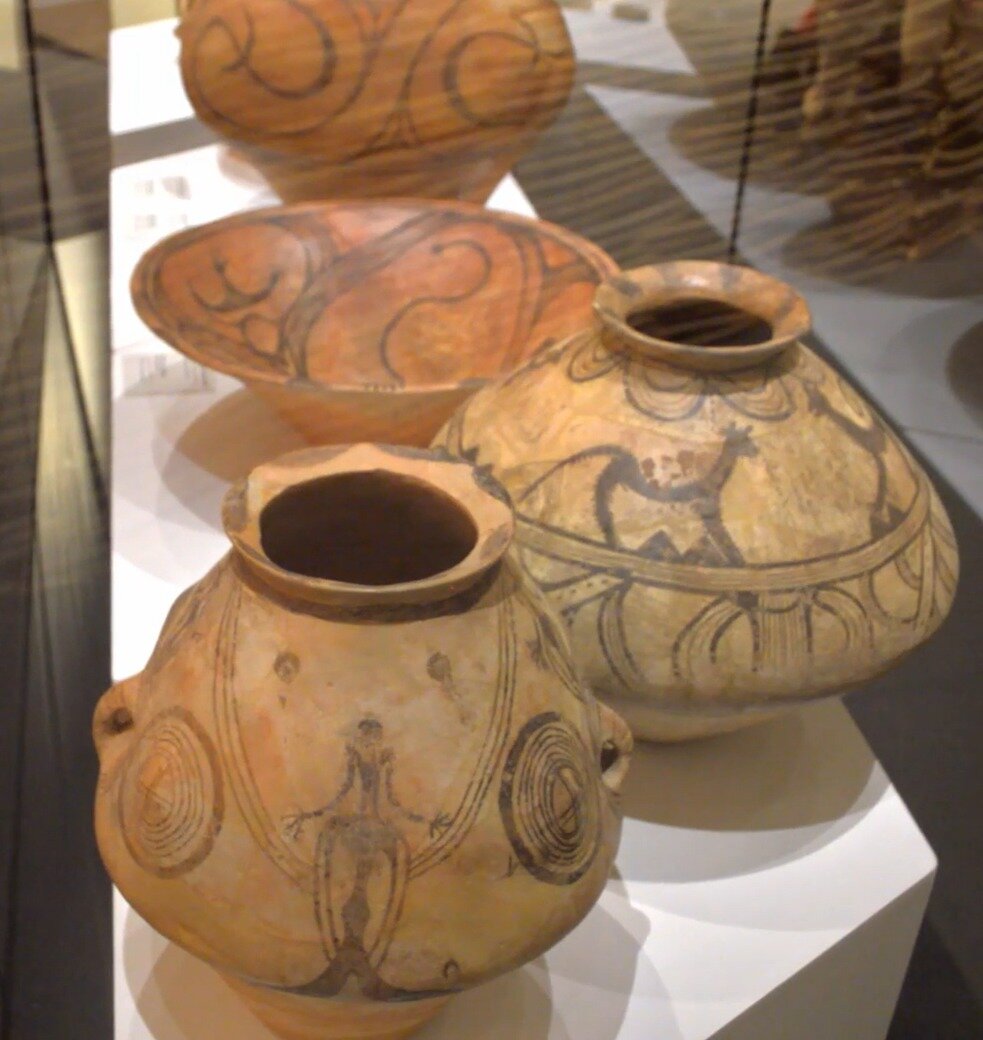
Harald Haarmann’s new book sheds light on the achievements of the Old European civilization, also known as the Danube civilization, which flourished between 6000 and 3000 BCE. Contrary to popular belief, many elements attributed to Greek origins stem from this pre-Greek culture. Modern research reveals that ancient civilizations developed along two distinct paths: communitarian administration without social hierarchy, as seen in the Danube and Indus civilizations, and state models with hierarchical structures, exemplified by Sumerian and Egyptian cultures.
This book highlights how the values and innovations of Old Europe laid the foundation for Greek civilization and, subsequently, Western civilization. By exploring these roots, the study provides modern Europeans with a deeper understanding of their heritage and the diverse origins of their cultural values. The book will appeal to scholars, researchers, and students of political science, history, cultural studies, and anthropology, as well as to everyone interested in a better understanding of European heritage, its values, and the Danube civilization.
This Review was published on amazon.com. Reviewed by Cheryl Benard in the United States on October 12, 2025.
Evaluation of the topic: timely and important
Overall rating of the book: 5 stars
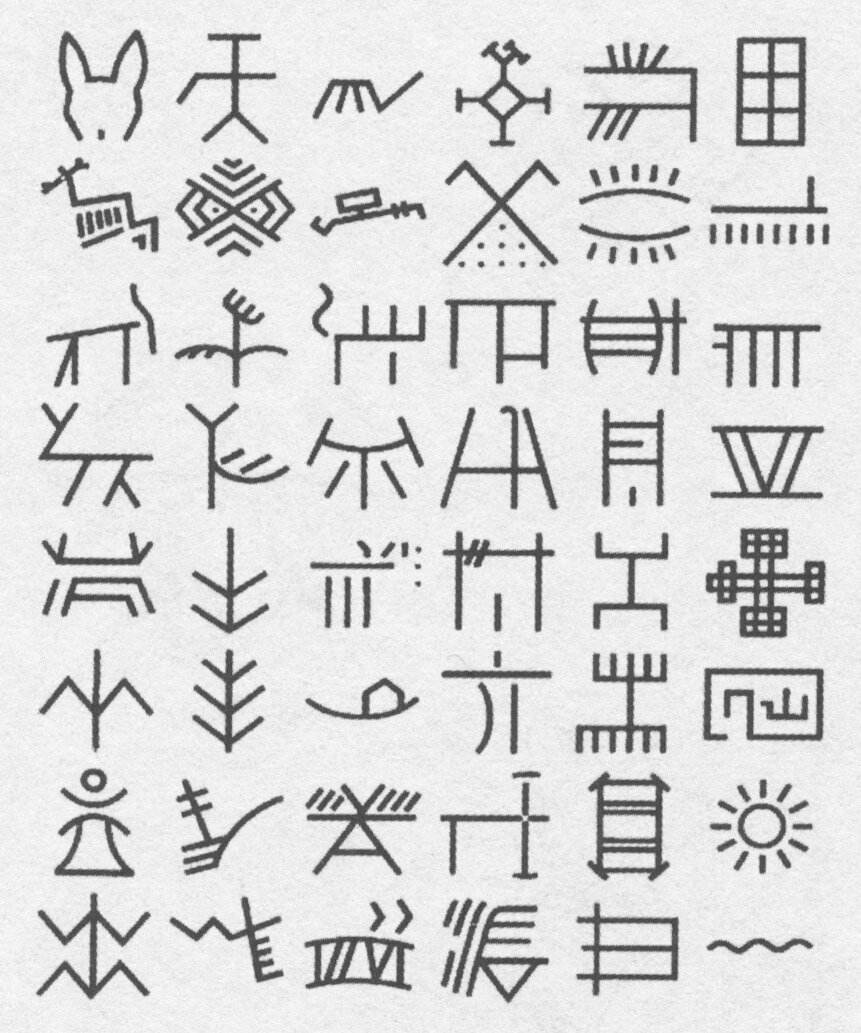
In the context of today's debates about values, diversity, immigration, and European identity, this book is critical reading. In 140 pages, it summarizes the findings and evidence that the author previously introduced in his much longer German-language volume "Das Rätsel der Donauzivilisation". On the basis of archaeological finds (sites of habitation, burial sites and artifacts), linguistic analysis (tracing Greek and Latin words back to an earlier language from which they were borrowed), and other tools of the trade of anthropology and archaeology, he provides incontrovertible evidence of a Eastern and Central European culture he calls the Danube civilization, and demonstrates that it had a written language, elaborate belief systems, metallurgy, advanced farming abilities, and significant long-distance trade, long before ancient Egypt/Mesopotamia/Ancient Greece/Rome. A number of the values and customs of today's Europeans can be seen as rooted in that very distant past, including equality of men and women, entrepreneurship, festivals still practiced today, and the role of alcohol in social interactions. All things that are opposed by the current wave of Muslim immigration and that are in jeopardy due to the Europeans' difficulty in standing behind their values and their culture.
-
24.8.2024
Some impressions of the collection of Haarmann’s publications in the archive, including photos featuring Prof. Vasja Velinova (director of the Centre) and Dr. Rossen Milev (director of Balkanmedia)
Photos: Dr. Rossen Milev
-
13.5.2024
Kaarina Kailo amongst other researchers will give presentations in S/HE Divine Studies Online Conference hosted by Mago Academy. The event will be held on June 7–9, 2024. More information here.
-
2.4.2024
The article "Lost People of Old Europe" by Harald Haarmann and Mariagrazia Pelaia has been published in the March 2024 issue of the Prometeo Liberato magazine. The online magazine is available on the website's bottom section and on Issuu service.
-
The Goddess Project Podcast interviews PhD Kaarina Kailo on her newest book. Watch on YouTube.
-
Harald Haarmann and other researchers will lecture in Vienna on April 20, 2024. The event will be in German and English.
Introducing the Association Pro Vanha Eurooppa (a non-profit organization registered in Finland) and its programmatic orientation
In a series of presentations, ancient living-conditions in the wider Danube Region will be illuminated, with the intention to provide a framework for an understanding of the achievements in the pre-Greek era and, to convey information about a major change in the perception of cultural history: Ancient Greek civilization of antiquity was not the cradle of western civilization.
It assumed a different role which was that of a turntable for the transmission of knowledge about the cultural heritage of the ancient Danube civilization.
Edit: Summaries of the presentations available here.
-
Jonas Hopf interviews Harald Haarmann on the topic of Europe's first civilization. The German-language discussion is available on YouTube. Automatic translation subtitles are available.
-
Uwe Hinrichs has written a review of Harald Haarmann's work “Kairos. Human Responses to the Flow of Time in the Dynamic Formation Process of Western Civilization.” (Georg Olms Verlagsbuchhandlung. Hildesheim 2023.)
The review will be published later in the Zeitschrift für Balkanologie journal.
-
Helen Hye-Sook Hwang interviews Dr. Kaarina Kailo in Return to Mago E-Magazine. Kailo discusses her career, multidisciplinary research approach and her art. Read the article here.
-
At the Bulgarian premiere of his book “Introduction to the Danube Script”, PhD Harald Haarmann proposes the addition of the Danube script to the UNESCO World Cultural Heritage List. Watch Haarmann’s presentation on YouTube.
The premiere, organized by the Central Library of the Capital, Association Balkanmedia, and Magazine 8, took place on November 23, 2023, in Sofia, Bulgaria.
“Ich weise die Annahme zurück, dass Zivilisation sich ausschließlich auf androkratische Kriegergesellschaften bezieht. Die Grundlage jeder Zivilisation liegt vielmehr in ihrem künstlerischen Schaffen, ihren ästhetischen Errungenschaften, ihren immateriellen Werten und der Freiheit, die das Leben für alle ihre Bürger sinnstiftend und angenehm gestalten, sowie in einem Gleichgewicht der Kräfte zwischen den Geschlechtern.”