
Resonance with Nature as a Source of Development for Young and Old
The role of nature as a source of development is significant for all age groups. It has now been demonstrated that individuals who exist in resonance with nature remain youthful for longer and, consequently, have a better chance of living a longer life. Following the Japanese model, many places now offer stays at thermal spas where the surrounding natural environment plays a vital role in therapeutic treatments. It is truly remarkable that in Japan, forest walks can be prescribed by physicians—they are, in effect, covered by medical insurance[1].
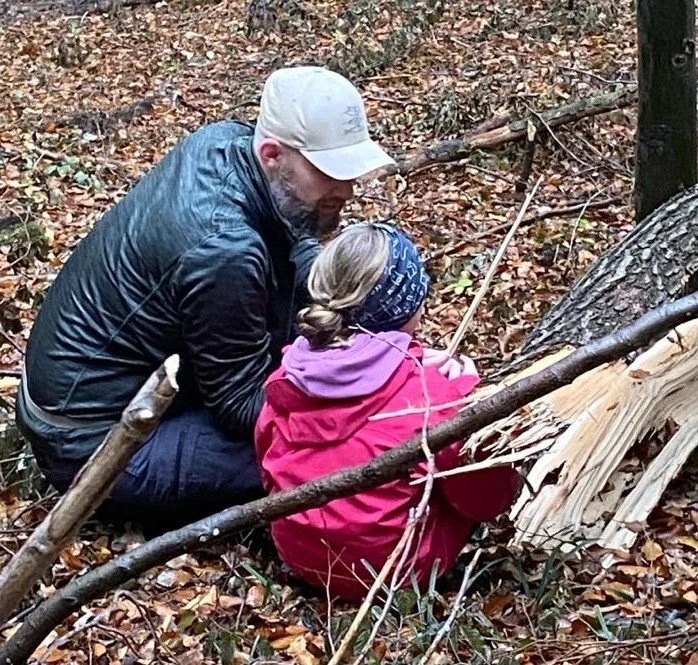
Nowadays, there is no longer any need to justify why the natural environment is important to us all. The discussion regarding the value of natural resources for our quality of life is more vibrant than ever; these concepts have rightfully become a core tenet of our collective understanding of balance and the quality of our living conditions.
Integrative therapy, for instance, incorporates encounters with forests and nature, confirming the healing power of the forest.[2] Tales about trees from across the globe, along with a wide array of mythologies, describe the strength and wisdom of nature as it interacts with humanity. Even in music, composers draw upon the sounds and imagery of the natural world—notable examples include Vivaldi’s *The Four Seasons*, Beethoven’s *Pastoral* (Symphony No. 6), and Smetana’s *The Moldau*. Nature is also celebrated in song lyrics[3] whether in rap, *chansons*, or folk music.
It should be noted, however, that this "collective understanding" applies only to those who consider proximity to nature essential to their quality of life—and who are also prepared to take responsibility for its protection. Exceptions to this are the political clowns who clearly have no clue about environmental protection and, in their ignorance, even block measures that would benefit the environment. They have no desire to listen; they are only interested in profiting from fossil fuels. Then, unfortunately, there are also many "couch potatoes" who cannot bring themselves to get up and take an active part in environmental protection projects. We must realize that it is up to all of us to take the initiative for a better world. Should we really leave the public sphere to the reckless and the irresponsible? No, absolutely not.
Yet, even many of those who are aware of the value nature holds for shaping our living conditions have only vague ideas about what a living connection with nature might actually look like. Quotes such as "Nature must be felt" (Alexander von Humboldt) or "Look deep into nature, and then you will understand everything better" (Albert Einstein) make it clear that a quick weekend excursion into the great outdoors is not enough. This does not mean, however, that one should forgo such trips altogether. Anyone who is serious about connecting with nature will venture into natural environments—into forests, to lakes and rivers, and up into the mountains.
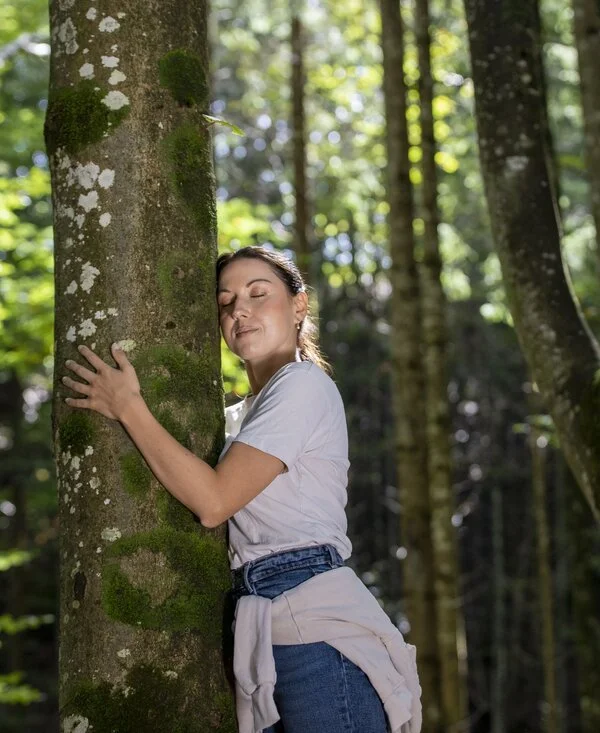
And for such excursions, there is one essential prerequisite: leave your mobile phone at home. Detaching from the digital world is a crucial condition for allowing the voices of nature to reach us and have an impact. This requires mindfulness and a slowing down of pace. It will likely take time and patience before one begins to hear the voices of nature and learns to grasp broader connections—for everything is linked to everything else. Who could express this more beautifully than Hermann Hesse, when he says: “Patience is the most difficult thing, and the only thing, worth learning. All of nature, all growth, all peace, all flourishing and beauty in the world relies on patience; it requires time, stillness, and trust.”
This principle also applies, in fact, to significant planning and decision-making regarding nature conservation. Such projects should not be undertaken hastily, but rather be well-considered and carefully planned, involving everyone who bears responsibility for them.
It serves no purpose for activists—in the vein of Greta Thunberg—to push for impulsive, high-pressure tactics, such as blocking traffic through sit-ins or gluing themselves to the road, or defacing the exterior walls of public buildings with paint. Rather than garnering broad public support, such actions tend to cause bewilderment, fueling polarization and social division, which in turn renders the discourse irrational and emotionally charged.
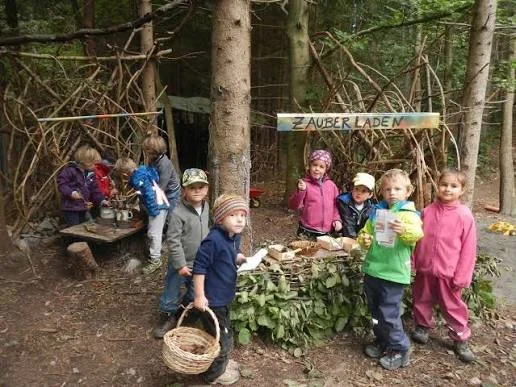
In a practical sense, therefore, nature conservation begins with each one of us—through our personal experiences and the interplay between nature and humanity, which, in turn, has a positive impact on our social coexistence. It is, then, a matter of fostering awareness at the grassroots level, rather than propagating ideologically-tinged, extremist slogans.
“Whoever finds the path.
[1]. Astrid Polz-Watzenig: Die heilsame Wirkung des Waldes in der Integrativen Therapie. Springer 2020 (ebook).
[2] Astrid Polz-Watzenig: Die heilsame Wirkung des Waldes in der Integrativen Therapie. Springer 2020 (ebook).