
Tattooing and body decorations - Old European 'fashion design'
Harald Haarmann
Saara Metsäranta
In this blog, we dive into the early history of tattooing. Tattooing and the use of stamps to decorate the body are ancient traditions that belong to the heritage of many cultures even to this day. In some countries and cultures body decoration with stamps or tattoos as a spiritual activity has continued into modern times, as for example in New Zealand among the Māori people facial decoration has been practiced. Facial ornaments convey information about which family a person belongs to and what his or her status is in the community. Moroccan women use plant-based henna when they decorate their own hands. The coloring agent of henna is obtained from the leaves of the henna shrub (Lawsonia inermis) when they are dried. In Hindu rituals and celebrations there is also a tradition of henna tattooing. Mehndi symbolizes eternal love, happiness and the blessing of marriage, a festive atmosphere, and it is also believed to protect against the “evil eye.” These tattoos are made especially at weddings, Diwali and important rituals.
In Old Europe, textile production began already many thousands of years ago. Those people were the first who used a vertical loom. Textiles were printed with ornaments using stamps. The stamps were made of clay. Their ends were engraved with various symbols and patterns. The same stamps were used when people decorated their own bodies and made temporary, fading tattoos.
The use of stamps is widely documented. It is very likely that, during the times of Old Europe, people had experienced to make permanent tattoos using needles. The tattoos have naturally not been preserved, but we get an indication of what kind of skin decoration was used in Old Europe by looking at decorated figurines. (Learn more about figurines in the blog: Figurines as household ritual objects and as enhancers of communal cohesion in society) These have been found in abundance. Some figurines’ bodies are entirely decorated.
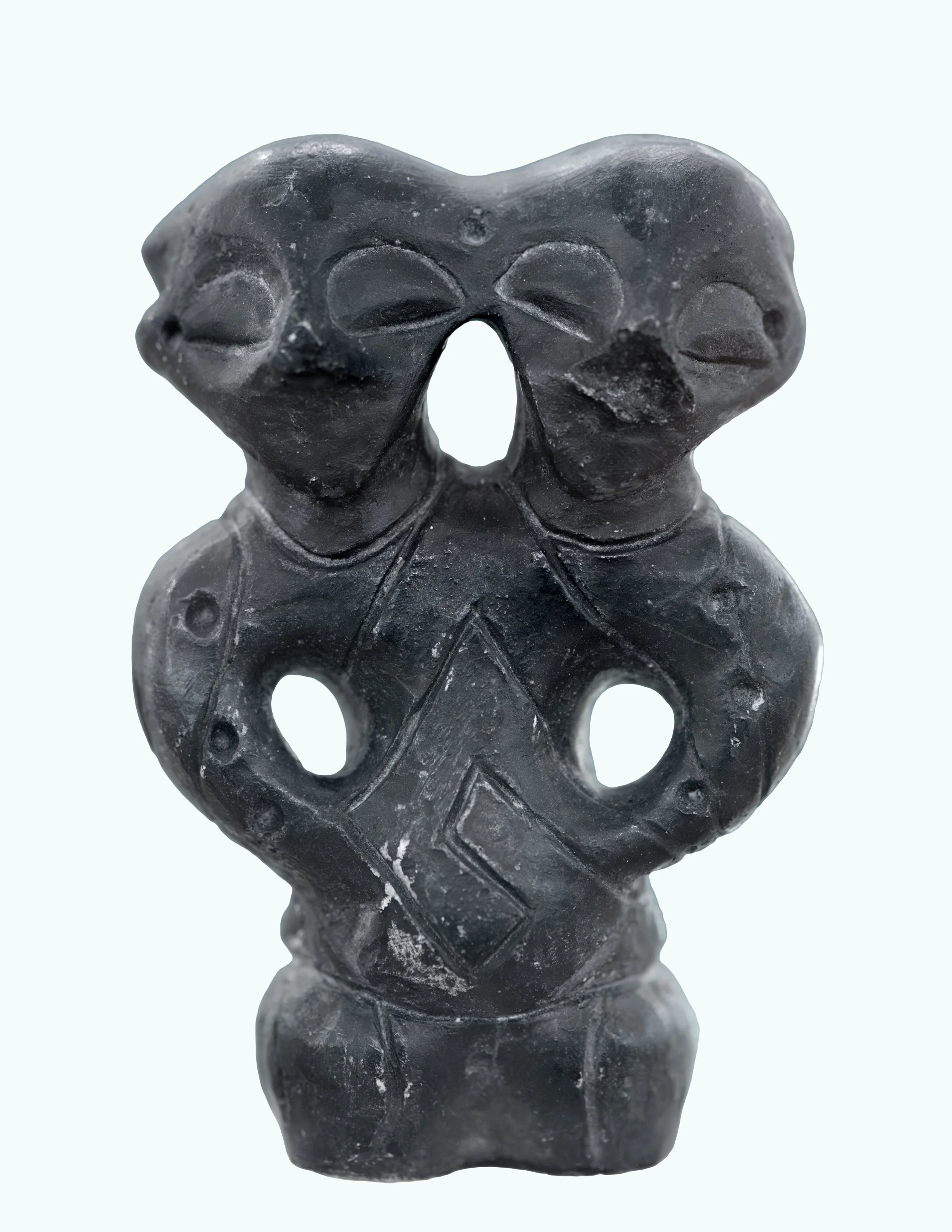
Anthropomorphic figurines, terracotta, Neolithic period, Vinca (Vinča) culture, around 5000 – 4500 years BC, Serbia. The figurine's central body is patterned with an angular spiral, the arms are decorated with small rings and lines that intersect at the neck and elsewhere on the body.
When talking about 'decorations', the term is actually imprecise. When comparing patterns, different pictorial motifs suggest that the decorations were related to religion. In addition to visual and aesthetic appeal, the symbols carried a spiritual 'charge'.
Various motifs, symbols and characters are engraved on some figurines from forehead to feet. It has been observed that certain themes, signs and symbols only appear on certain parts of the body. Body decorations reveal the ancient Europeans' awareness of symbolism and artistry in the use of visual motifs. The same symbols were printed not only on the skin, on figurines, but also on pots and other objects. This shows that patterning decorations was the prevailing way, perhaps reflecting the timeless human need to enter spirituality and communicate with divinity, the supernatural.
Figurines have been identified with the following distribution of symbols in certain body areas:
-In the head area and legs below the calves, parallel vertical or horizontal lines appear.
-The symbol `V` appears as a basic pattern and/or number varying in the following areas: neck, chest, torso.
-Spiral, simple or layered, most commonly occurs in the chest, torso, thighs, buttocks.
-Meander, simple or layered, appears in the following areas: abdomen, thighs, and buttocks.
-Various patterns formed from lines mostly appear on the shoulders and upper arms, as well as on the chest.
-Complex patterns are dominant in the lower body, abdomen, and buttocks.
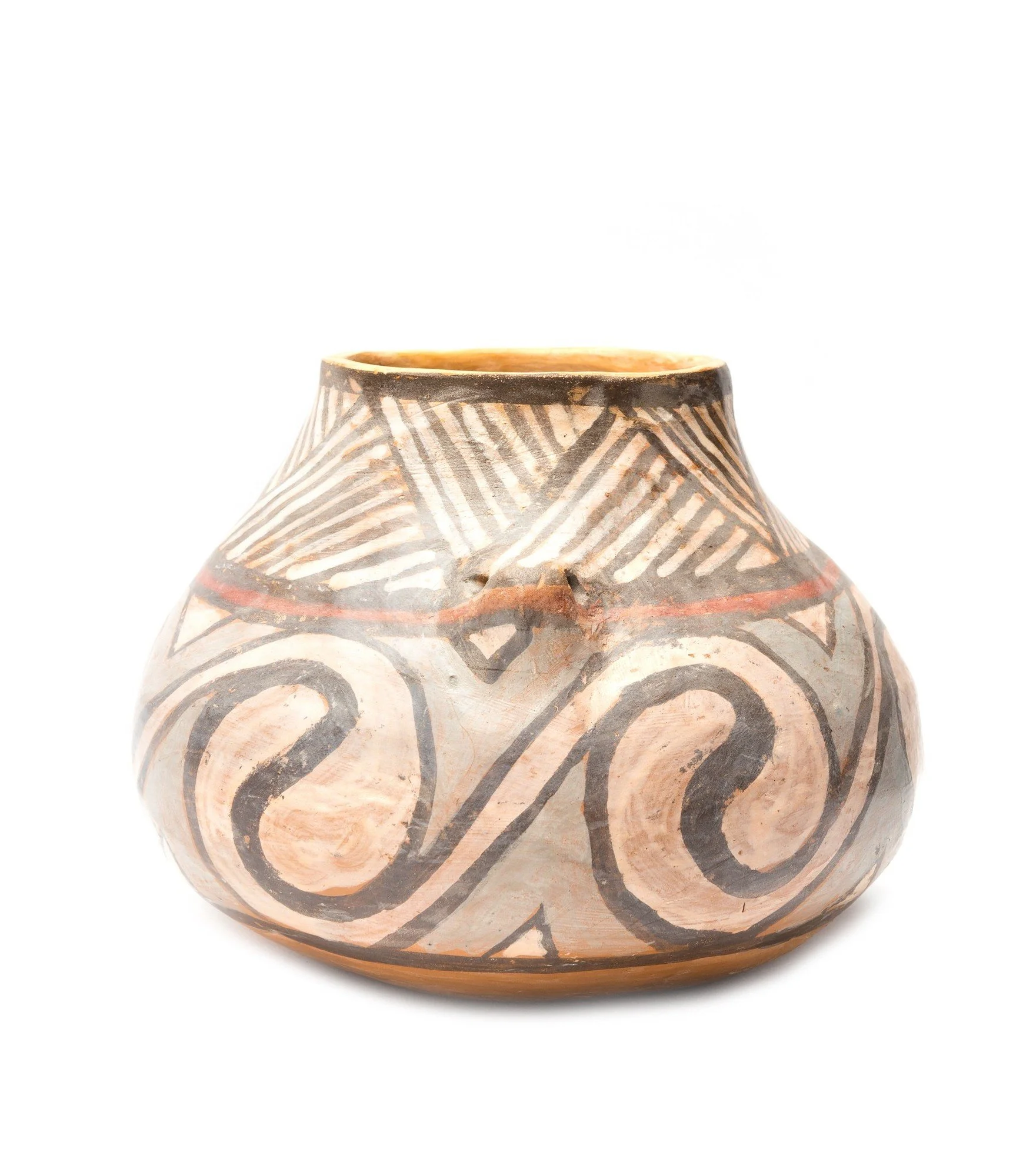
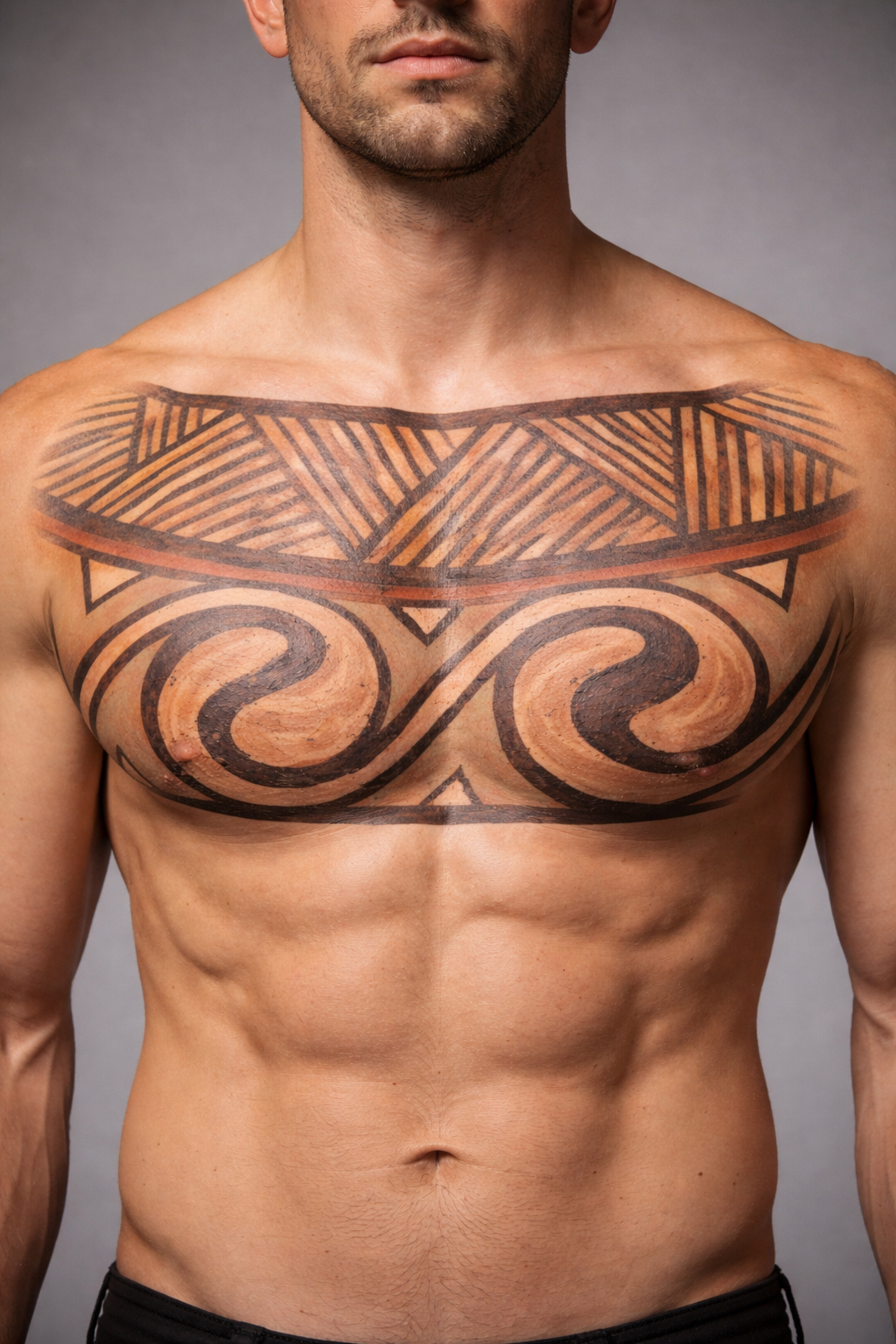
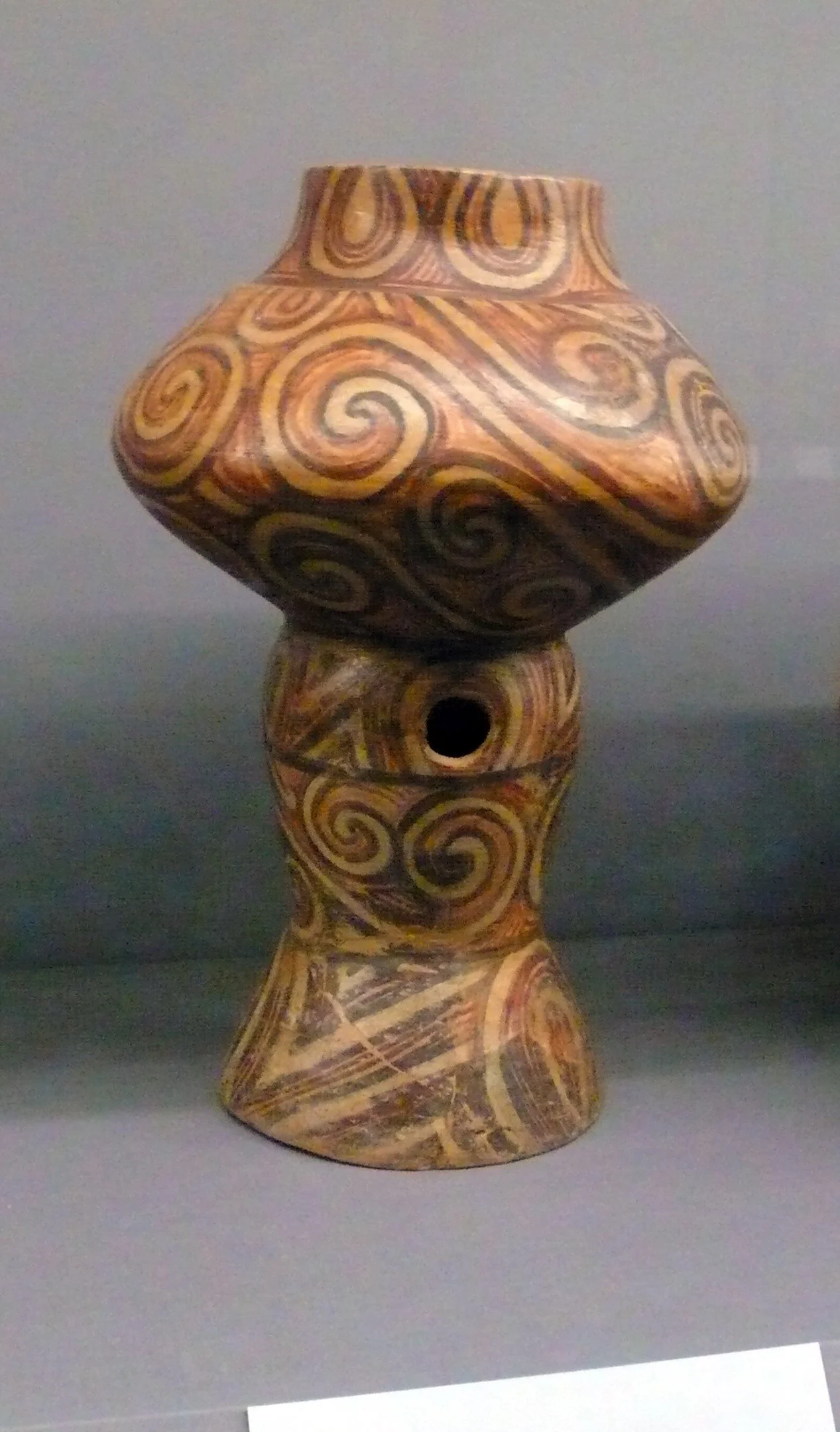
The image shows a ceramic pots from the Cucuteni culture and a modified tattoo impressions. The tattoo is placed on the man's chest, imitating figurines, so that the V-patterns and lines are placed on the upper body and the spirals are placed more centrally, at the chest. The same patterns that decorated the pots were also used in body decorations. The Cucuteni-Trypillian culture extends from the Carpathians to the Dniester regions, focusing on Moldova.
Belonging to the group of religious symbolst spiral, zigzag-pattern, V-motif in different variants, meanders. In some contexts, symbols from different fields form an aesthetic composition, such as pictorial motifs (from decorative drawing) and written characters (from notation drawing).
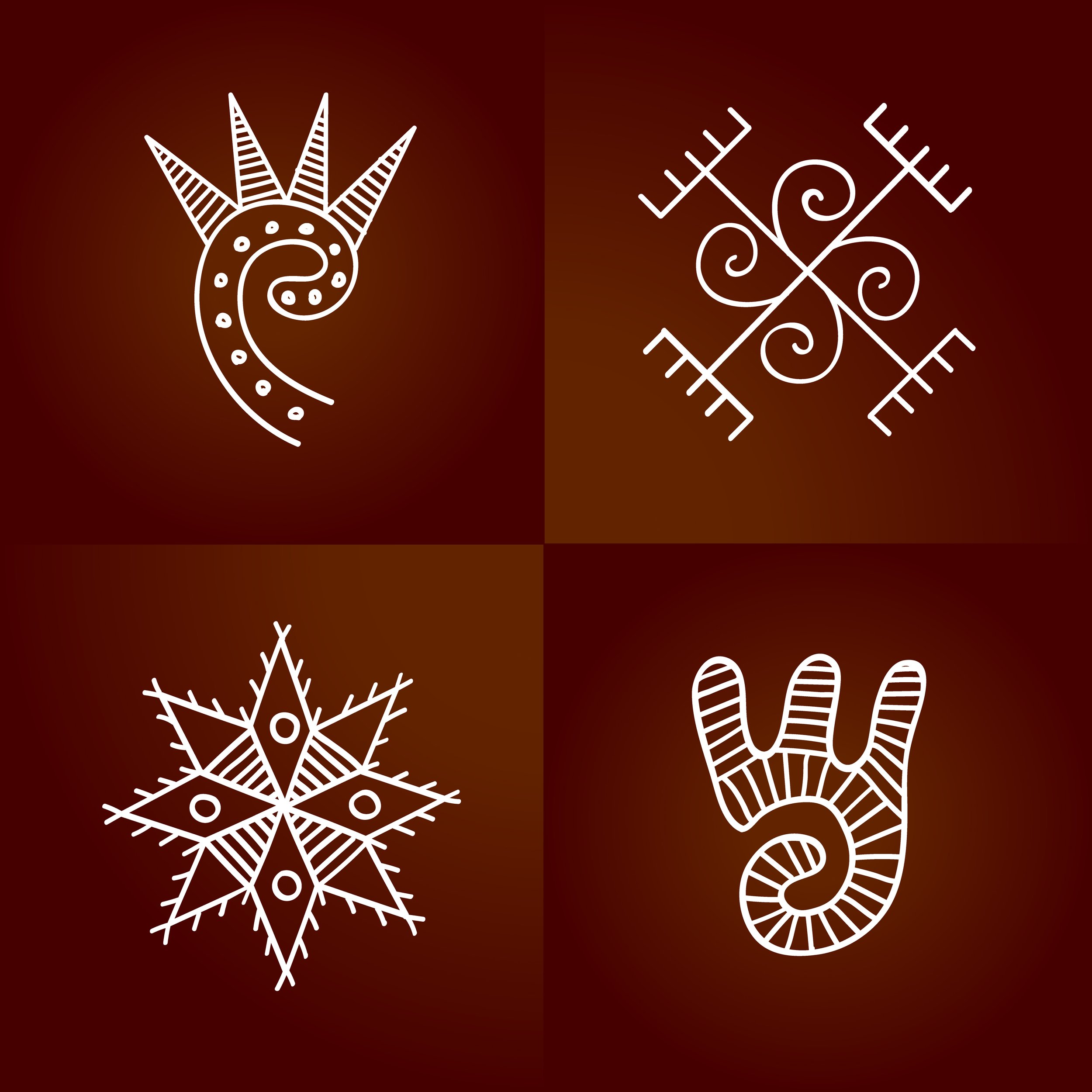
Cucuteni-Trypillian cultural archaeological symbols, where naturalistic motifs are mixed with abstract and geometric patterns. The symbols have also been used in body decorations.
The visual elements were not only abstract and geometric, but in the decorations of the figurines there occurred also naturalistic subjects. The naturalistic subjects were connected to fundamental cultural themes. The principal elements and the most important symbols can be traced back as far as the 7th millennium BCE. In Old Europe in the civilization at all periods popular forms included, for example, the triangle, zigzag, wedge, meander, spiral and angular shapes, all of which also appear as ornamental bands (Haarmann 2019, 193, 196).
In the development of the spiritual life of the farmers of ancient Europe, the cult of the great goddess emerged from the female protector spirit from the 6th millennium BCE onwards. The goddess of the underworld, worshipped by all, appeared everywhere in nature (Haarmann 2019, 156). (Learn more from Goddess Cult in blog The effects of patriarchy on goddess culture) The goddess' most important attribute as the giver of life was water, the elixir of life. “The primal force of nature is the sea, water…the serpent goddess, the goddess of the sea…is a feminine being who holds the key to mystery in her hands”. Symbols of water included the wavy zigzag, meander, and spiral (Haarmann 2019, 163). It is important to remember that all interpretations of the belief systems and customs of that time are more or less speculation, as we have no exact documents from such distant times. Certain body parts may also have symbolized certain aspects of life. These meanings are culturally bound.
Water symbols appear on the bodies of figurines precisely in the body parts that emphasize fertility and sexuality, such as the breasts, thighs, buttocks, torso (spiral) or belly, thighs and buttocks (meander). From this it can be roughly suggested that this fertility and life force was perhaps meant to be protected or enhanced by tattooing a meander or spiral symbol on these body parts.
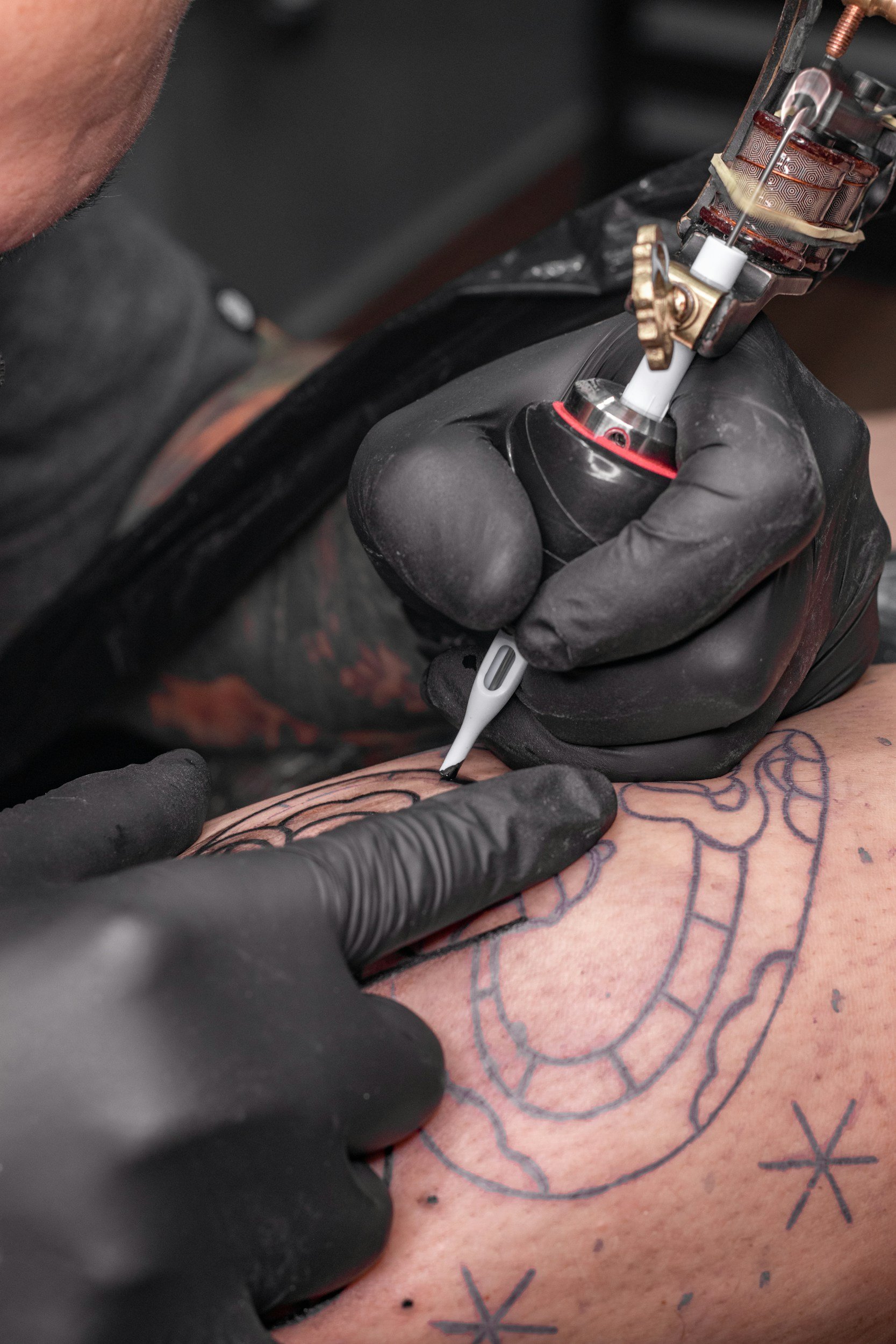
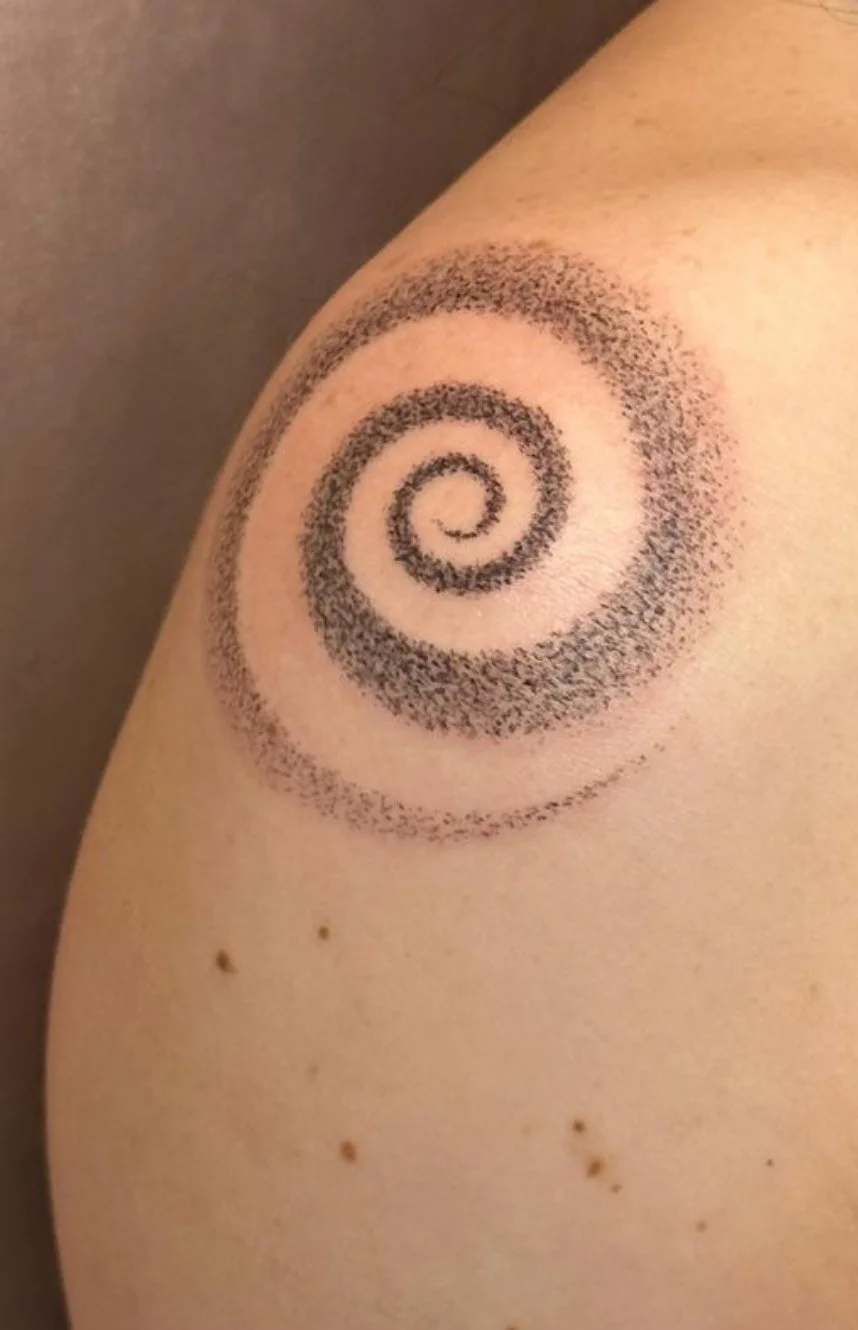
The Neolithic style of design is still visible in modern tattoos. In this picture, a snake tattoo is being made. For many, the snake still represents renewal and the continuity of life.
Zigzag-the pattern can again be interpreted as referring to the snake that sheds its skin, symbolizing renewal and continuity. The continuity of life is also depicted by the pattern's flow on the body. It can be interpreted as representing the flow of energy both within the body and in nature. Different parts of the body have also been associated with various locations of the soul. Patterns may have been used to internalize and strengthen skills or knowledge, as well as to increase good luck or protection. Tattoos combine aesthetics with the artistic and spiritual meanings of the time. People in Old Europe carried the same symbols on their bodies that they used to decorate their clothes, objects, and figurines. This indicates how a unified cultural system of meaning was constructed within civilization. The same patterns are still tattooed on the skin today, even though the old cultural associations may have been vanished from everyday memory.
REFERENCES
Haarmann Harald (2019) “Mystery of the Danube Civilisation – The discovery of Europe´s oldest civilisation, Marix Verlag.
Haarmann Harald (2026) “Figurines as cultural identifiers in space and time”. Olms.